Art in Fiction

I am very excited to share a beautiful new website that my readers will undoubtedly enjoy. Art in Fiction, created and managed by art-novel author Carol Cram has an interesting platform: to showcase writers and works who have been inspired by the arts. Which arts, you ask? All the arts! From music to ballet to painting and everything in between. You can subscribe for free and see all the wonderful content there including an upcoming submission by yours truly about the methods I used to write Fate. I will announce it again when it posts there. In the meantime check it out at https://www.artinfiction.com/

All the best, Adin Dalton

Review of the ballet premiere based on my novel, Fate

By James D Watts, Tulsa World:

    “The life of the composer Piotr Ilyich Tchaikovsky is – to borrow a phrase once used to describe his homeland – a riddle, wrapped in a mystery, inside an enigma.  Tulsa Ballet’s extraordinary “Tchaikovsky: The Man Behind the Music,” which had its world-premiere performance Friday at the Tulsa PAC, may not fully unravel all the conundrums or answer all the questions that have swirled around Tchaikovsky since his death in 1893.

    “What this ballet does, with remarkable power and exquisite artistry, is use elements of Tchaikovsky’s life and character to tell a surprisingly universal story – one that deals with ideas of individuality and identity, and the often destructive conflict between the private self and the public eye.

    “It is a story that artistic director Marcello Angelini has wanted to set into motion for decades, and the wait, it would appear, has been worth it. The international team of artists that have been brought together to create this work has made a richly nuanced work of dance theater, one that has all the spectacle expected of a ‘story ballet’ while telling a intimate tale in which much of the true drama takes place within the psyche of its title character.  It is, simply, a triumph.  Choreographer Ma Cong has said one of the aspects of Tchaikovsky’s life that intrigued him was the ‘double life’ he led – he was during his lifetime one of Russia’s most honored composers, yet his homosexuality was something that he tried to keep hidden, since acting upon feelings was a criminal offense at the time. The ballet focuses on trio of relationships, all of them in some way doomed from the start. There is attraction Tchaikovsky (danced by Arman Zazyan) has toward a young violinist, Josef Kotek (Rodrigo Hermesmeyer), for whom he originally composed his Violin Concerto. In the ballet, the two meet at a social gathering, where Tchaikovsky is the guest of honor, and Kotek is performing. The attraction between the two men is instant, but both of highly conscious of the perils they could face – when a simple hand placed upon a shoulder could be scandalous.

    “Cong’s choreography of the scene in which men meet to work on the concerto emphasizes that push and pull – the way, for example, Tchaikovsky’s tentative physical advances are warily eluded though not outright rejected.

    “As portrayed in the ballet, one doesn’t know if Tchaikovsky and Kotek exchanged anything more than smoldering looks and a symbolically charge handkerchief. But Kotek remains an object of obsession, one that metaphorically and literally haunts Tchaikovsky’s life.

    “Kotek is present when Tchaikovsky meets a potential objecs of his affections – the opera star Mme. Artot (Na Eun Kim), whom Tchaikovsky courts when interactions with Kotek catch the disapproving eye of the social order. And he is at the wedding between Tchaikovsky and Antonia Miliukova (Madalina Stoica), an overeager student who has set her cap – and everything else – on making Tchaikovsky her own, although he can’t muster the same sort of passion that she obviously feels for him.

    “We’ve watched Cong’s development as a choreographer over the years, and what he accomplishes in “Tchaikovsky” is some of the most impressive work he has ever done – not simply on a technical level, but in the way he is able to tell a story through movement.

    “He gives you the sense of the mundaneness of 19th-century Russian society with lots of fast, flashy, yet repetitive dancing that almost distract from the title character – a way of showing Tchaikovsky’s ability to blend into that society, and how that will change.

   “The duets he has created are character-driven is the best way – the passionate restraint between Tchaikovsky and Kotek; the slow-burning passion that Artot expresses in spite of Tchaikovsky’s disinterest, and his futile efforts to respond in kind; the violent ardor with which Antonia throws herself at Tchaikovsky, and his equally violent response, expressed through some of ballet’s most inventive and startling choreography.

    “And Tchaikovsky’s own passions and fears are palpable expressed in two fever-dreamlike sequences, including a climactic “judgment” in which Tchaikovsky is hounded by masked, gavel-wielding figures that drive him to the brink of sanity and beyond.

    “The performances throughout are at the highest level. Zazyan is hardly ever off stage, yet his dancing from the first moment to the last is powerful and expressive, full of nuance and feeling expertly communicated. It was truly a heroic performance.

    “Stoica’s Antonia is a whirlwind of passion and need, and she goes at the extremely taxing duet with Zazyan with a fearlessness that is breathtaking. Hermesmeyer makes Kotek an intriguingly enigmatic figure, whose conflicted emotions are ably expressed.

    “Ramirez and Sena Hidaka danced a superb pas de deux as part of the opera scene (which featured a fine performance by soprano Whitney Myers), and the ensemble scenes were performed with great energy and precision.

    “Tracy Grant Lord’s multi-level, mobile set design, creativity lit by Matthew Marshall, evoked a wide range of locations, from high-society salons to country retreats, while her costumes were elegantly understated.

    “The ballet’s score was assembled by Cong and composer-librettist Oliver Peter Graber from familiar and lesser-known pieces by Tchaikovsky, augmented by Graber’s own compositions and selection from some of Tchaikovsky’s contemporaries.

    “The result was a remarkably seamless, highly dramatic whole, which the Tulsa Symphony, under the direction of Peter Stafford Wilson, performed about as well as one could hope. It was a highly colored, well-paced performance that packed as much of an emotional punch as the dancing.”
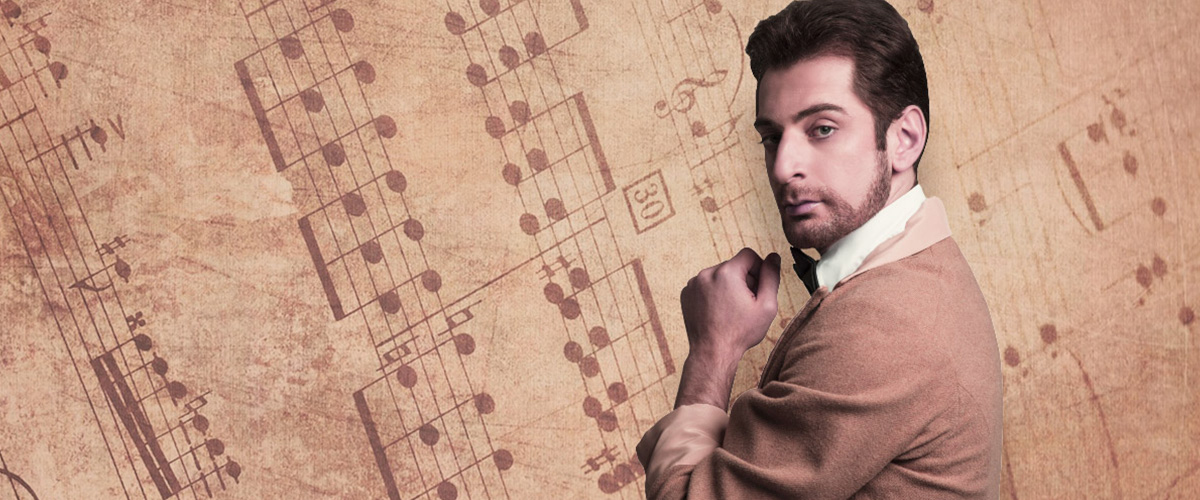
From book to ballet: the greatest compliment.

Something quite wonderful has happened that I would like to share with fans of my novel.  Last year I received a direct message through Facebook from the venerable artistic director of the Tulsa Ballet, Marcello Angelini.  The Tulsa Ballet is one of the country’s oldest and most esteemed ballet companies. He wanted me to know that he had read “Pyotr Ilyich” (now re-published as “Fate”) and that he was so taken with my story that he decided to produce, from scratch, a full evening-length ballet about the life of Tchaikovsky!  

The moment was surreal for me of course, and once I came back to Earth and thought about what this really meant, I was ecstatic.  While the libretto does not follow the exact course of Tchaikovsky’s life as described in my novel, I am pleased that this ballet means more people will be exposed to the composer’s work and general persona.

Well, the choreography and casting are now complete, the sets and costumes are ready, the music (some original, and the rest compiled from the great composer) are now set in a new score.  The New Zealand Ballet, whose technical crew is collaborating on this project, has arrived in Oklahoma and things are moving at a hurried pace towards the premiere date at the gorgeous Tulsa Performing Arts Center.  The new ballet is titled “Tchaikovsky – the man behind the music.”  You can purchase tickets right on their website.  Here are all the exciting details:

Artistic Director: Marcello Angelini, Choreography: Ma Cong, Costume & set design: Tracy Grant Lord, and Musicologist: Oliver P. Graber.  Premiere dates are March 29-31, 2019.

Tchaikovsky-Web-4

Photo courtesy of the Tulsa Ballet


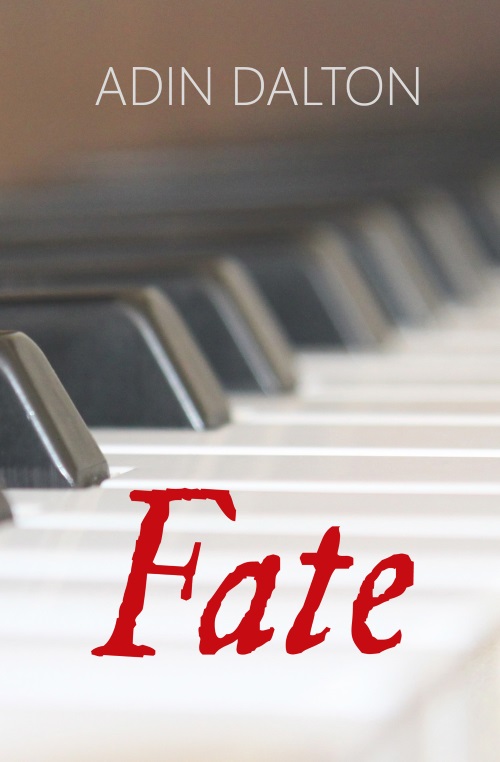
Pyotr Ilyich – the Tchaikovsky novel is being republished as Fate

After much soul searching I have made the excruciating (and exciting) decision to re-publish my novel Pyotr Ilyich with a new title and cover!  It will now be called simply, Fate and all changes should be taking place in late February of 2-019.  Everything else will be the same -even the amazon item number so that older reviews will still count.  I believe the new title perfectly describes the story I tell, and hope this new direction in style will open up the world of Tchaikovsky to more readers than just those who tend to be academic.  Please do me the honor of letting your friends and loved ones know about this change, especially the ones who definitely intend to read it. (The look of the website will eventually change to reflect the the new identity.)

All the best, Adin Dalton

Fate by Adin Dalton

Happy Thanksgiving!

Heading out on the road to meet loved ones for Thanksgiving dinner? Don’t forget to take some Tchaikovsky music with you. And if you are the one doing the cooking, why not play some of his gorgeous works for your guests? It will set the tone for a safe and happy celebration. From my family to yours, have a wonderful holiday!

All the best, Adin Dalton

It’s that Nutcracker time of year

The holiday season is everyone’s chance to see the full, evening-length ballet, The Nutcracker. Many major cities offer a professional production of it, but even smaller cities and towns may present some version of it. The reason of course is that from its narrative to its very-recognizable music, it has the effect of giving people that Christmas spirit.

This extremely well-known Tchaikovsky ballet premièred at the Mariinsky Theatre on Sunday, December 18, 1892 (on a double-bill with Tchaikovsky’s one-act opera Iolanta.) While not initially popular as a ballet, its score was enormously praised and was an immediate success as an orchestral suite of its best sections. It stood on its own as the Nutcracker Suite. This always refers to the concert, not  the ballet.

The Nutcracker ballet was a collaboration of many minds. Based on the Hoffmann story, the idea of a ballet libretto was put forth by the director of the Russian Imperial Theatres, one Ivan Vsevolozhsky. The director brought Pyotr Tchaikovsky on board for the musical score, promising him that master choreographer Marius Petipa would also be working on the production. Vsevolozhsky hoped it would live up to the extraordinary success of The Sleeping Beauty ballet on which all of them had also collaborated.

In the end, Petipa’s health was not good and he was forced to step aside in favor of the assistant ballet master, Lev Ivanov. Petipa did not keep out of its creation entirely however, and had Ivanov base all of the dancing on his own notes and original vision. As was usual, Director Vsevolozhsky took responsibility for the set and costume designs.

For readers of Fate, none of this production work is as important as what was going on during the première itself. That night proved a difficult time for the composer, a turning point in his realization that he had a very difficult problem on his hands. (Without giving anything away, let me just say that it was nerve wracking for me to write and affected me greatly. I can never think of The Nutcracker in the same way again.) That section of my story is clearly “the beginning of the end” for Tchaikovsky.

So why am I mentioning a Christmas ballet before it’s even Thanksgiving? Because if you don’t get a ticket soon, it could sell out!  Why not take a moment to look up productions in your area and treat your loved ones to a very famous holiday tradition.

Happy reading, Adin Dalton

Apple blocking sales of books!

It’s true… in an apparent effort to force folks to purchase only from their own iBooks service, some nefarious things are going on. Let’s say you try to order books from the handy Amazon App on your iPhone or iPad, (or even just from amazon.com,) your device will only give you the option of “downloading a sample” or adding it to “a list,” whatever that is. The point is that there’s no option to buy! So strange, and so blatantly unfair to authors.

We have a solution for anyone experiencing this: visit amazon.com on a PC, laptop, or Mac instead of a personal device that supports the app. You should get the regular view that will even include one-click buying if you have an account on Amazon. Good luck, and please help spread the word about this!   Happy reading, Adin Dalton


Character Analysis – Nikolai Rubinstein

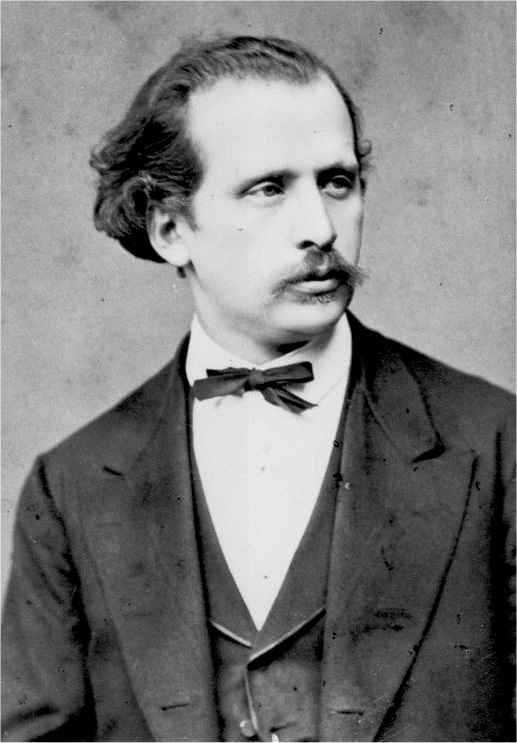
Nikolai Rubinstein

Nikolai Rubinstein

In “Fate,” one of the very first characters introduced is Nikolai Rubinstein.  As a composer and talented musician, Rubinstein was quite well known in his day and through his work was granted the directorship of the Moscow Music Conservatory where the young Tchaikovsky was hired to teach.  (Tchaikovsky’s fame undoubtedly played a part in how history has treated Rubinstein, completely overwhelming the memories and mentions that may have come to him had circumstances been different.)  Nevertheless, Rubinstein was important in the musical circles of his time and held great power over all concert performances in Moscow, inside and outside the conservatory. His opinion of a certain musician could make or break their career.  One sees this very thing at the beginning of the novel, with Rubinstein granting Pyotr ‘s request of having young Sergei Taneyev play the Piano Concerto in concert before the public.

While Nikolai was clearly one of Pyotr’s harshest critics, it’s obvious that this was merely to challenge the composer’s talents.  In reality and in the novel, there’s a mutual respect between these two men; they worked together on operas and orchestral pieces in a partnership that, in hindsight, was very important to Pyotr’s development. And though the shy composer was greatly intimidated by Nikolai, he later discovers him to be one of the most loyal allies he could have.

One last thing before I give away too much… let me remind readers that it was Nikolai who had a close acquaintance with the wealthy Nadezhda von Meck for years. He must get credit for her discovery of Pyotr. It was also Nikolai who recommended then-student Yoself Kotek to von Meck to fill an empty spot in her musical ensemble. Many events that come together later were directly due to Nikolai Rubinstein.

All the best, Adin Dalton

[NOTE: I thought it might be helpful if I posted in-depth information about some of the main characters in “Fate.”  Since these characters are based actual living, breathing people in the 19th-century, scholars do know something about their points of view, attitudes, and general personalities.  I had the honor of tweaking these attributes further in my novel of course, and so it will be my take on them that I write about here.  I will do many of these over the coming weeks, continuing on from the last one which featured Anatoly Tchaikovsky, one of the composer’s younger brothers.]