Character Analysis – Anatoly Tchaikovsky

Anatoly Ilyich Tchaikovsky

Anatol_T

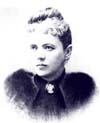
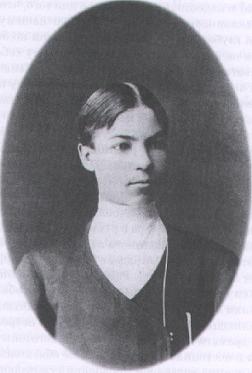
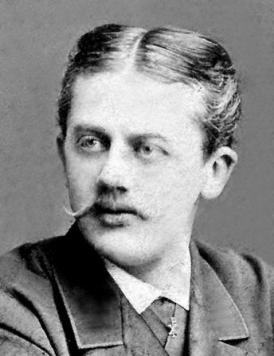
Anatoly and Modeste Tchaikovsky were Pyotr’s younger [twin] brothers.  It is clear that the composer adored them both, seeing them raised from infancy as he did. He visited them frequently when they were enrolled and living at the Imperial School of Jurisprudence in Saint Petersburg and could not have missed the obvious fact that while Modeste was showing strong homosexual tendencies (of which they discussed on more than one occasion) Anatoly was decidedly not.  His penchant for the female sex was clear, and in many ways must have provided some comfort to Pyotr. During their teenage years Pyotr was in his mid to late twenties and trying to balance the needs and desires of his own sexuality with a simultaneous shame and disgust of it.  

Of these three brothers, only Anatoly ended up embracing a career in legal theories for which the school had prepared them.  He went on to become a competent attorney is Saint Petersburg and later rose to a moderately powerful position in politics as the Governor of Tiflis.  By the time of his governorship, Pyotr was one of the most celebrated composers in Europe (think near rock-star status) and definitely helped the governorship come about. 

While usually busy with his career, Anatoly found time for his family, attending gatherings at his sister’s estate at Kamenka where various family members would come for days or weeks at a time.  The Tchaikovsky siblings maintained love for one another throughout their lives, undoubtedly influenced by their highly emotional and exceedingly loving father, Ilya.

Readers of my novel will already know that Anatoly eventually took a wife… an event that must have pleased Pyotr very much (that is, until he got to know her.)  Praskovya, was from a well-to-do family and had a pushiness to her personality that had to have been exceedingly off-putting to Pyotr. Even so, Pyotr would have done all he could to get along with her in order to please his younger brother.

If you are interested in the twists and turns of Anatoly’s life and want to learn more, read Fate.  He is definitely an interesting character but I cannot give too much away here!  Best regards, Adin Dalton

[NOTE: I thought it might be helpful if I posted in-depth information about some of the main characters in “Fate.”  Since these characters are based actual living, breathing people in the 19th-century, scholars do know something about their points of view, attitudes, and general personalities.  I had the honor of tweaking these attributes further in my novel of course, and so it will be my take on them that I write about here.  I will do many of these over the coming weeks, continuing on from the last one which featured Yosef Kotek, one of the composer’s more important lovers.]

Character Analysis: Yosef Kotek

YOSEF KOTEK

Yosef and Pyotr

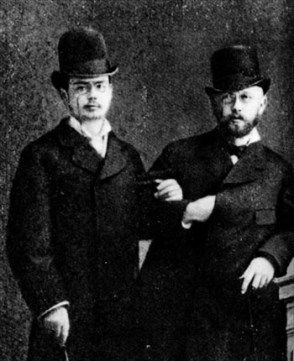
Yosef Kotek (left), with Pyotr Ilyich

    Yosef is one of my favorite characters, especially of the ones romantically involved with Tchaikovsky. Also spelled Iosef or Josef in phonetically-translated Russian, this young man was  known to be a former student from the Moscow Conservatory where the composer taught music during his late twenties to early thirties.  Yosef was fifteen years his junior but clearly had a romantic connection to his professor. In my novel Pyotr Ilyich, we visit a period where Yosef has returned to the conservatory for the express purpose of visiting his former professor. He had recently been employed by the wealthy Nadezhda von Meck as a violinist in her private music ensemble and was anxious to catch up with Tchaikovsky. (As my readers know, Nadezhda eventually becomes the composer’s benefactor so one might wonder if her connection to Yosef is just a strange coincidence… It seems less so when one realizes that Nadezhda was well acquainted with Nikolai Rubinstein, the Conservatory Director, who obviously recommended Yosef to her when she inquired about employable musicians.)

Since Yosef is one of the few people who attended the infamous wedding, it became clear to me that his involvement with Tchaikovsky had become much more than just sexual. Yosef had stood by him through his entire courtship of Antonina, which I admired him for greatly, and thus decided to write him as an especially caring soul. This was love, not sex.

Later in my story, when the two are no longer involved but are working together on the Violin Concerto, I needed to show a definite maturing on the part of Yosef.  I accomplished this by having him confide in Tchaikovsky in regard to his bout with syphilis, and his questioning of the composer’s judgment in regard his wanting to dedicate the concerto to him.  As these were all true facts, they felt right being included in my story.  –I will stop my character analysis here to avoid any spoilers which may come up!  Best regards, Adin Dalton

[NOTE: I thought it might be helpful if I posted in-depth information about some of the main characters in “Fate.”  Since these characters are based actual living, breathing people in the 19th-century, scholars do know something about their points of view, attitudes, and general personalities.  I had the honor of tweaking these attributes further in my novel of course, and so it will be my take on them that I write about here.  I will do many of these over the coming weeks, continuing on from the last one which featured a housemaid named Marie who became involved with Tchaikovsky’s valet.]  

Character Analysis – Marie

MARIE (Laundress at the boarding house in Clarens, Switzerland)

Marie - suggested appearance only

    Of all the characters in “Fate,” Marie might be thought of as one of the last ones to ever be chosen for a character analysis.  Her somewhat brief (but important) appearance in the story might even convince readers that she is a fictionalized character inserted for the sole purpose of showing Tchaikovsky’s valet, Aleksei as having firm heterosexual tendencies.  The fact is that Marie, the shy laundress in Clarens to whom Aleksei is passionately attracted, was very real indeed. 

It was necessary for me to write her as realistic as possible, especially since she was a living breathing person whose path crossed so significantly with Tchaikovsky’s. I merged  the daily flirtations of Marie and Aleksei with the composer’s rehearsals (with musician Yosef Kotek) of the famous Violin Concerto.  After all, there was more than just music practice going on that spring. How do we know this? I will explain.

Found in some of Pyotr’s diaries is the evidence that Aleksei was responsible for the pregnancy of the young girl.  The two men got news of it after they returned to Russia and while Aleksei never saw Marie again, a monetary connection was established.  Pyotr felt somehow responsible for the girl’s plight and supported her financially for many years.  

I was tempted to include this information in my novel but finally decided that it wasn’t necessary. I felt I had painted Tchaikovsky’s  “good character” and “self respect” sufficiently enough to where this particular generosity would have simply been redundant. I hope readers enjoyed learning about it here.  All the best, Adin Dalton

[NOTE: I thought it might be helpful if I posted in-depth information about some of the main characters in “Fate.”  Since these characters are based actual living, breathing people in the 19th-century, scholars do know something about their points of view, attitudes, and general personalities.  I had the honor of tweaking these attributes further in my novel of course, and so it will be my take on them that I write about here.  I will do many of these over the coming weeks, continuing on from the last one which featured Tchaikovsky’s possible nemesis, conductor Eduard Napravník.]  

Character Analysis – Eduard Napravník

Eduard Francevič Napravník

Eduard_Napravnik

Who could look at a photo of Eduard (pronounced Edward) and not immediately assess that he was definitely some kind of troublemaker? That was my first impression.  (The photo here shows the famed conductor in one of his friendlier moments.) His pointed features and intense, beady eyes lent a sinister aura about him in every photo I looked at.  When I learned more about the man behind the face, I found my impression to be  correct.  He was ambitious to a fault, pedantic by nature, and certainly not a man to be trifled with.  With these things in mind, I portrayed him (correctly) as one of Tchaikovsky’s talented musician friends but added a certain intimidation factor between them. The shy composer must have been somewhat wary of Eduard, especially in their later years when Napravník had much power as the principal conductor of the Imperial Theatres.

Napravník was a Czech musician from a poor family who was fortunate to attend the Saint Petersburg Musical Conservatory (where he met fellow student Tchaikovsky) and who settled in Russia to continue his career. He rose quickly through the ranks, undoubtedly elevated from his successful performances conducting the young composer’s first operas.

When my readers first encounter Eduard Napravník, he is already at the height of his powers. Tchaikovsky is clearly nervous to be in his presence, and the sinister conductor’s huge ego is laid bare on the page.  This was by design of course; I wanted to show him as a nemesis to Tchaikovsky.  One may even get the idea that he will play an important role in the illegal trial to come.  That could be… but I dare not give anymore away. Suffice it to say that Napravník comes and goes throughout the book and always leaves the reader wanting more.  Best regards, Adin Dalton

[NOTE: I thought it might be helpful if I posted in-depth information about some of the main characters in “Fate.”  Since these characters are based actual living, breathing people in the 19th-century, scholars do know something about their points of view, attitudes, and general personalities.  I had the honor of tweaking these attributes further in my novel of course, and so it will be my take on them that I write about here.  I will do many of these over the coming weeks, continuing on from the last one which featured Tchaikovsky’s only sister, Aleksandra.  For those readers who flinch every time they come across Russian names, these short characterizations should help introduce them to my characters in a simpler way.]  

Tchaikovsky’s Symphony no. 4

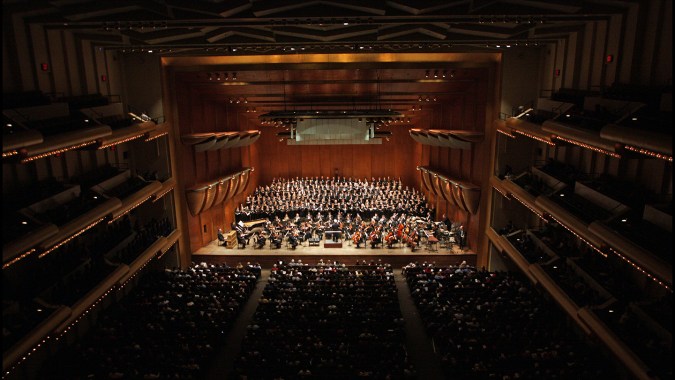
Is Fate calling you?  Buy your tickets now for what is sure to be a spectacular evening in New York City…   Internationally acclaimed Russian conductor Tugan Sokhiev will lead the musicians of the New York Philharmonic for a performance of Tchaikovsky’s enigmatic Fourth Symphony, as well as Mendelssohn’s String Quartet no. 2. Mr. Sokhiev is the music director of Russia’s famed Bolshoi Theater and will present this sure-to-be-amazing concert at David Geffen Hall on Saturday, October 27 at 2pm. There will even be a Question & Answer session with the musicians directly following the performance! Prices range from $33 to $77.  Visit the hall’s website for more information.  If you cannot attend this special afternoon presentation, there are evening performances of the Fourth Symphony on October 25, 26, and 27 as well.  [2018]     

David-Geffen-Hall.jpg


Character Analysis – Aleksandra Davydova (Sasha)

Aleksandra Davydova (Sasha)

sasha

Aleksandra Tchaikovskaya Davydova

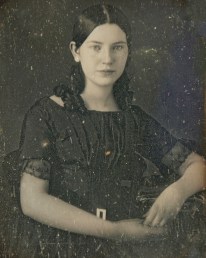
It is clear from photographs that Aleksandra, Tchaikovsky’s only sister, was a truly beautiful woman. With five brothers (both older and younger) she was doted upon and adored by their father Ilya. Their mother (also Aleksandra) died when she was twelve, leaving the father to take care of his many children alone. Nanny’s were employed of course…while not wealthy, the Tchaikovsky family had means enough to afford such a luxury. 

The common Russian nickname for Aleksandra is Sasha, and that is exactly what her family called her. (As for her last name of Tchaikovskaya, it gets the necessary “aya” on the end to denote a female or feminine version of the name. This becomes a “middle name” when one marries.)  Aleksandra married a gentleman named Lev Davydov who was five years her elder and from a good family.  Of course, when Aleksandra took the Davydov name it became Davydova to denote the feminine version. Hence her name: Aleksandra (Sasha) Tchaikovskaya Davydova.

Sasha, as I will call her here, is one of my kinder, gentler characters in “Fate.”  She is sensitive, caring, and highly intelligent, and devoted to her husband Lev and their seven children. Their working estate was in an area called Kamenka and was some distance from the main cities of Moscow and Saint Petersburg. This is why it is always quite a journey (by train and then carriage) for Pyotr to come and visit his nieces and nephews. I will not go into Sasha’s life too deeply here so that I do not cause any spoilers for the book but trust me when I say that it was extremely eventful and worth reading about in my novel. 

Almost all of Sasha’s scenes in “Fate” were based on actual moments in her life, including the remarkable scene where the notorious Antonina comes to stay with the Davydov’s at Kamenka. This was accurately portrayed, right down to Antonina dripping blood on Sasha’s sofa because she had nervously bitten her fingernails so short.

It is also true that Sasha was much more tolerant and understanding than her husband Lev when it came to Aleksei staying in Pyotr’s own room whenever the two visited Kamenka. It’s clear that Lev either suspected or was convinced of the composer’s homosexuality and wanted all appearances regarding their visit to be proper. He undoubtedly also harbored some God-fearing traits that would have made his opinions on this matter even stronger. This is what I strove to portray in the book. [Read my Character Analysis part 1 for more on the Aleksei-Pyotr sexual relationship.

It is evident from the actual correspondences between them that Pyotr loved Sasha deeply.  Their close, affectionate relationship shows that the composer was not a woman-hater by any means, even though one might get that impression from his spiteful relationship with his wife, Antonina.   

-Adin Dalton

[NOTE: I thought it might be helpful if I posted in-depth information about some of the main characters in “Fate.”  Since these characters are based actual living, breathing people in the 19th-century, scholars do know something about their points of view, attitudes, and general personalities.  I had the honor of tweaking these attributes further in my novel of course, and so it will be my take on them that I write about here.  I will do many of these over the coming weeks, starting last week with Tchaikovsky’s loyal servant, Aleksei Sofronov.  For those readers who flinch every time they come across Russian names, these short characterizations should help introduce them to my characters in a simpler way.]  

Character Analysis – Aleksei Sofronov

I thought it might be interesting (and helpful to many) if I posted in-depth information about some of the main characters in “Fate.”  These characters are based actual living, breathing people in the 19th-century, scholars do know something about their points of view, attitudes, and general personalities.  I had the honor of tweaking these attributes further in my novel of course, and so it will be my take on them that I write about here.  I will write about many over the coming weeks, starting today with Tchaikovsky’s loyal servant, Aleksei Sofronov.  (Note: Since Russian language translations are merely English written phonetically by the way a word sounds, Aleksei is sometimes written Aleksey.)  For those readers who flinch every time they come across Russian names, these short characterizations should help introduce them to my characters in a simpler way.

Aleksei Ivanovich Sofronov

sofronov_aleksei2

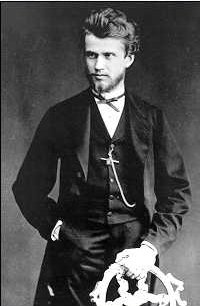
Aleksei Sofronov (young)

   Aleksei’s middle name of Ivanovich is typical of the way the Russian culture automatically assigns them.  It simply means that this particular Aleksei was the son of “Ivan.”  Now that we have that out of they way, let me add that Russians adore nicknames and refer to people by them as soon as a certain level of familiarity has been achieved.  The usual nickname for the proper name of Aleksei is Alyosha, and that is precisely what Tchaikovsky called him whenever saying his name out loud, or writing it in an affectionate way.

Aleksei was one of my favorite characters from the very start of my “Fate” book project and so I was very careful in my writing of him. Fortunately, he turned out even better than I had hoped. I simply adore him now and guess that most readers will feel that same. I knew he would be an important character but when I started the novel I had no idea just how important. He is integral to my story, as he was to the great composer’s life.

He is only “mentioned” in the first section of my novel, and does not appear as a character until well into the story. This is because he is still a young boy at the beginning, and new to Tchaikovsky’s service. These facts made him unnecessary to the story at hand. A bit later when he does appear, he is almost immediately thrust into the middle of things. He helps Tchaikovsky dress “plainly” so that the composer can go to the premiere of his ballet Swan Lake without being recognized. Aleksei’s immaturity is evident during this time and continues well into the scenes where the composer seeks to marry Antonina. He is often frustrated with the composer’s demands, which sometimes confound him, but clearly has a strong loyalty to him.  He is not meek with Tchaikovsky, and speaks out when necessary. Still, there is an innate kindness about him, one that seeks to please his master.

By the time he and Tchaikovsky are in Switzerland and later Florence, Italy, I depicted him as the teenager he was and the man he was becoming. Aleksei now understands that the composer depends on him greatly, more than anyone else in his life, and not just for everyday errands. He has learned that Tchaikovsky’s health, melancholy, and mental well-being depends on his gentle service.  I did not mention any past [possible] sexual contact between them because it was not important to my story and also because it would certainly not have been a love affair. If sexual contact had occurred between them it undoubtedly would have been the typical servant-type of gratification commonly practiced at the time, even by heterosexual men with their underage male servants. This is because the culture of the time accepted pre-pubescent males as something closer to female. This is obviously something today’s culture no longer accepts.

Once Aleksei is grown to manhood and sexually active [with females] himself, I devised a conversation between him and Tchaikovsky so that both characters could start on a new footing that would definitely no longer include the duties of sexual gratification and that would also show a change in their common relationship – one that was respectful and affectionate as two males regardless of their sexual persuasions. Much of the internet incorrectly defines Tchaikovsky’s complimentary closings in his correspondences as sexual seemingly to make him seem extra gay and having homosexual relationships with apparently everyone. The truth is that it was common for the composer [and others] to write a send off like, “I kiss your hands,” or “I kiss your face,” before signing his name. This was poetic only, and was meant to show affection to the recipient, nothing more.

As for Aleksei’s knowledge of the musical works being composed at this time, I sought to show some level of awareness on his part. After all, he and Tchaikovsky were together day and night, living together for years, and Aleksei would have been in an important supportive role of the works the maestro was creating.

By the time Aleksei is faced with being drafted into the Russian army, the close relationship between master and servant should be more than evident in my novel. I feel that my writing of these events is true to the feelings of both parties and not overstated. Tchaikovsky was devastated at the idea of Aleksei being sent away from him, especially after so many years of familiarity, something not easy for the shy composer. He must have wondered if he would ever be that close to anyone ever again. 

I will stop my analysis here so as not to cause any spoilers but please feel free to contact me if you have unanswered questions or if you desire my opinion of their relationship after this mid-point in the novel.

Best regards, Adin Dalton

Interpreting a life…

Fictionalizing the life of any historical figure is always a delicate thing. At least, it should be. I have read several biographical novels myself and have not always been pleased with the outcome. There is a particular respect that is required, in addition to the writer’s own admiration or admonishment of the subject. The author’s overall opinion of the real-life person they are bringing back to life becomes the basis of their personal point-of-view.

For “Fate,” these things got a little complicated. I admired the composer and his work a bit too much and often had to take a step back from my personal feelings. I needed to be purposely judgmental and even critical of his behavior in certain situations while still considering the ways of the late eighteenth-century in Europe. Like any human being he was far from perfect and if my novel was going to be true to him it also had to be realistic. He was famously neurotic and withdrawn but clearly had other sides to his personality, as all people do. He could not have engaged in so many (confirmed) sexual situations if he was withdrawn with every person all the time. I had to present a balance of his known temperaments while placing him in the situations we now know took place. Time period, social norms, historical accounts, diary entries, and the composer’s own sensitivity had to be constantly considered. This is what I strove for in my writing.

An obvious example is Tchaikovsky’s attraction to male youths. I could not write about it by using today’s standards because it would have created a very different character, one who would be thought of as a pedophile.  My story had no chance of being acceptable if the protagonist was despised by the reader. It was important that the reader understand that the time period presented was that of a very different world.  Europe and Russia had a society that was culturally different from the U.S. in the twenty-first-century. Yes Tchaikovsky was homosexual, but sexual interaction with boys was the practice of heterosexual males as well, and was commonplace. Young male servants were expected to attend to their master’s sexual needs. The reason this practice was accepted was because (like in fifteenth-century Florence) pre-pubescent boys were not thought of as male. In fact, they were considered almost female. Granted, Tchaikovsky was attracted to male youths because of his homosexuality but undoubtedly took some comfort in knowing that this behavior was going on everywhere even as he battled his own demons.

I admit that I “cleaned up” the events of his life in my novel so as not to offend too many readers, and to make the finished novel one that I also could be proud of. I accepted that Tchaikovsky was the way he was, and knew that to cover it up would make the story a falsehood. (Fortunately, by following the truth the flow of events near the end of the composer’s life presented themselves to me and enabled me an ending that I believed it.) An example of my clean-up is the way I avoided including a sexual scene between Tchaikovsky and his servant, Aleksei Sofronov. While it would have been more than appropriate, the scene would have come too early in the story and been misunderstood by the reader; they would not yet understand the characters, the society, or circumstances in which my story was gradually immersing them.

Beyond the sexual “minefield” that I had to tiptoe through, there were other interesting things about bringing Tchaikovsky to life in such a realistic way. By following an actual calendar of his composing work, musical debuts, concert schedule, and travels, I was able to follow along with the events of his life as they happened. For instance, while he was engrossed in composing one work, another work that he had completed a year or two before would require his attendance at its actual performance. Such was his life…always moving forward but constantly revisiting past creative endeavors at the same time. I had never thought of this before.

Finally, I’d like to touch on a comment made recently. The reader was curious as to how much of the story was fiction and how much was true. The entire story is my own of course, the dialogue, thoughts, descriptions, and point of view all subject to my interpretation of the composer’s life. As for which scenes are taken from actual events, let me just say that all of the ballet history is absolutely true as well as the locations of where (and when) Tchaikovsky’s musical compositions were created.

I used very little creative license in regard to the characters, sticking to what was already known about their personalities. I ended up only needing to invent three and only for use in telling the story. The more intimate scenes are of course from my imagination as there would be no moment by moment accounts of these, not even in his diaries.

Readers might think that the scene inside the Vatican’s Sistine Chapel between Pyotr, Modeste, Aleksei, and Kolya was my creation alone but it is from an actual, historical account. So is the scene in Paris where Pyotr picks up a negro (his words, not mine) on the Champs-Elysee for a sexual tryst.  With so much to work with I did not have to fabricate more than about five percent of the entire story. As for the ending, let’s just say it appeared on its own as a result of never straying from the path of Tchaikovsky’s life–and my research of it. For me it was the only logical way (of the many versions out there) of how Tchaikovsky’s death came about.

(Spoiler: I learned much about of Tchaikovsky’s life through his letters to other people, especially to his brother, Modeste. Therefore, during the times that he and Modeste are together their mutual correspondences cease to exist, giving me little to go on. This is when I had no choice but to fabricate the missing parts. Sometimes Tchaikovsky’s diaries filled in nicely in leiu of the correspondences, like in the case of Bonaparte the pimp. None of my accounts of Bonaparte were fabricated, although I’m certain readers must think they are! Truth can be stranger than fiction, you know.)

All the best, Adin Dalton
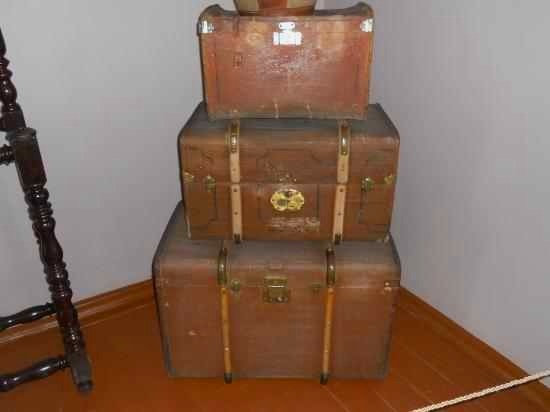
Tchaikovsky’s trunks

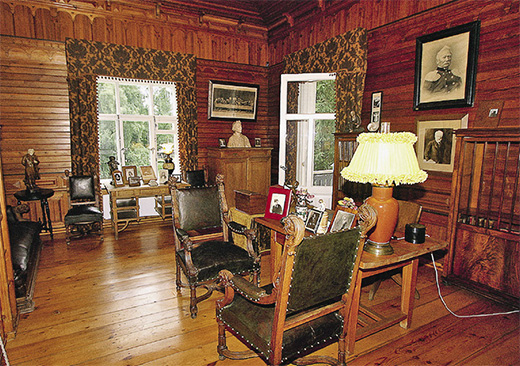
Okay it’s true, it doesn’t take a whole lot to get me excited when it comes to Tchaikovsky. From a great performance of his works to a mere mention of him in a Playbill or magazine, I tend to go bonkers. Some things even cause me to tremble! So it was when I found this photo of Pyotr’s traveling trunks a few years back. I saved it (obviously) and decided to share it with everyone here. It brings to my mind the scene I wrote in Fate when he and Aleksei are checking in to the very expensive Hotel Meurice in Paris and the bellman goes to mark their trunks with their suite number in chalk. This was common practice in the 1800’s and no one thought anything about it. In those days, the trunks were there to protect what was inside, and no one much worried about the trunk itself. Today, someone with a $12,000 Goyard or Vuitton trunk would freak out and probably sue the hotel if anyone marked it up! Below, I am also happy to include a photo of Pyotr’s salon in his beloved (final) house in Klin, Russia.

Best to all and happy reading, Adin Dalton

Tchaikovskys trunks

klin salon

Tchaikovsky in Florence

While I was writing the novel Fate, I became, through my research, fully aware that Tchaikovsky stayed for a few months in the hills just south of Florence’s Arno river. He resided in a house selected-and-paid-for by his sole benefactress, Nadezhda von Meck who was herself staying just a street or two away during that same time.  Readers of my novel will remember that her Villa Oppenheim was an exquisite gem of a place, located right behind the famous Boboli Gardens.  Readers will also remember that Nadezhda went into her arrangement with the composer under the agreement that they never, ever meet. With that in mind, she chose a place for him to stay that would feel near to her, but far enough away where their daily walks would not converge. 

Let me back up a bit and declare that during the bulk of my research the internet was completely undeveloped and google maps was not even a thing. I had no way of knowing if Nadezhda’s Italian villa still existed, and certainly was unable to determine the address of Tchaikovsky little house.  All I knew was that it happened, as it was described in various letters and diaries available to me.  This forced me to turn to careful deduction when it came to my descriptions and scenes. (It would have so much easier if I had simply known of them, or even been able to visit the spots.)

By sheer luck, I can now see that I wasn’t far off. (Grateful sigh of relief.)  Yes, the internet finally came through and here’s how it happened:  Last month when I was researching sights to see on trip to Florence, I just happened to stumble upon Villa Cora. The moment I saw its location and photo, I knew it was Nadezhda’s Villa Oppenhem! I so pleased that it had not been torn down after some 140 years and was thrilled that someone had lovingly restored it into a hotel. It would certainly be one of my stops; to be inside one of the actual homes belonging to Nadezhda, and one that I had written about — it was a dream come true.  Little did I know that there was even more to discover…

A stone’s throw away, at Via di S. Leonardo 64 in Florence, Italy there’s a plaque pointing out the very same stucco building –just as I had pictured it–  where Pyotr Ilyich stayed during that particular sojourn (chapters 66 through 77 if you’re interested.)  If you are a Tchaikovsky fan and happen to be going to Florence, I highly recommended strolling over to it. On the map below you can see both Villa Oppenheim (now Villa Cora) as well as a red pin showing the composer’s residence. So fun!

All the best, Adin Dalton