‘Fate – The Tchaikovsky Novel’ has more than a few memorable characters, almost all of whom were living, breathing people in the late 1800’s. If you’re curious about them or just want to know more after reading the book, you’ve landed on the right page. The following are all written by me. More of these articles will posted in the future as well. -Adin Dalton
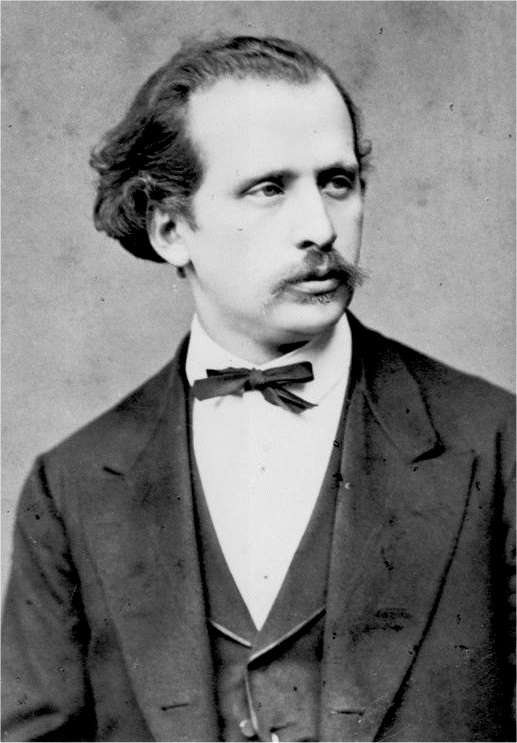
Nikolai Rubinstein
In “Fate,” one of the very first characters introduced is Nikolai Rubinstein. As a composer and talented musician, Rubinstein was quite well known in his day and through his work was granted the directorship of the Moscow Music Conservatory where the young Tchaikovsky was hired to teach. (Tchaikovsky’s fame undoubtedly played a part in how history has treated Rubinstein, completely overwhelming the memories and mentions that may have come to him had circumstances been different.) Nevertheless, Rubinstein was important in the musical circles of his time and held great power over all concert performances in Moscow, inside and outside the conservatory. His opinion of a certain musician could make or break their career. One sees this very thing at the beginning of the novel, with Rubinstein granting Pyotr ‘s request of having young Sergei Taneyev play the Piano Concerto in concert before the public.
While Nikolai was clearly one of Pyotr’s harshest critics, it’s obvious that this was merely to challenge the composer’s talents. In reality and in the novel, there’s a mutual respect between these two men; they worked together on operas and orchestral pieces in a partnership that, in hindsight, was very important to Pyotr’s development. And though the shy composer was greatly intimidated by Nikolai, he later discovers him to be one of the most loyal allies he could have.
One last thing before I give away too much… let me remind readers that it was Nikolai who had a close acquaintance with the wealthy Nadezhda von Meck for years. He must get credit for her discovery of Pyotr. It was also Nikolai who recommended then-student Yoself Kotek to von Meck to fill an empty spot in her musical ensemble. Many events that come together later were directly due to Nikolai Rubinstein.

Anatoly Ilyich Tchaikovsky
Anatoly (and Modeste) Tchaikovsky were Pyotr’s younger [twin] brothers. It is clear that the composer adored them both, seeing them raised from infancy as he did. He visited them frequently when they were enrolled and living at the Imperial School of Jurisprudence in Saint Petersburg and could not have missed the obvious fact that while Modeste was showing strong homosexual tendencies (of which they discussed on more than one occasion) Anatoly was decidedly not. His penchant for the female sex was clear, and in many ways must have provided some comfort to Pyotr. During their teenage years Pyotr was in his mid to late twenties and trying to balance the needs and desires of his own sexuality with a simultaneous shame and disgust of it.
Of these three brothers, only Anatoly ended up embracing a career in legal theories for which the school had prepared them. He went on to become a competent attorney is Saint Petersburg and later rose to a moderately powerful position in politics as the Governor of Tiflis. By the time of his governorship, Pyotr was one of the most celebrated composers in Europe (think near rock-star status) and definitely helped the governorship come about.
While usually busy with his career, Anatoly found time for his family, attending gatherings at his sister’s estate at Kamenka where various family members would come for days or weeks at a time. The Tchaikovsky siblings maintained love for one another throughout their lives, undoubtedly influenced by their highly emotional and exceedingly loving father, Ilya.
Readers of my novel will already know that Anatoly eventually took a wife… an event that must have pleased Pyotr very much (that is, until he got to know her.) Praskovya, was from a well-to-do family and had a pushiness to her personality that had to have been exceedingly off-putting to Pyotr. Even so, Pyotr would have done all he could to get along with her in order to please his younger brother.
Readers of my novel will already know that Anatoly eventually took a wife… an event that must have pleased Pyotr very much (that is, until he got to know her.) Praskovya, was from a well-to-do family and had a pushiness to her personality that had to have been exceedingly off-putting to Pyotr. Even so, Pyotr would have done all he could to get along with her in order to please his younger brother.
Anatoly Ilyich Tchaikovsky
Anatoly (and Modeste) Tchaikovsky were Pyotr’s younger [twin] brothers. It is clear that the composer adored them both, seeing them raised from infancy as he did. He visited them frequently when they were enrolled and living at the Imperial School of Jurisprudence in Saint Petersburg and could not have missed the obvious fact that while Modeste was showing strong homosexual tendencies (of which they discussed on more than one occasion) Anatoly was decidedly not. His penchant for the female sex was clear, and in many ways must have provided some comfort to Pyotr. During their teenage years Pyotr was in his mid to late twenties and trying to balance the needs and desires of his own sexuality with a simultaneous shame and disgust of it.
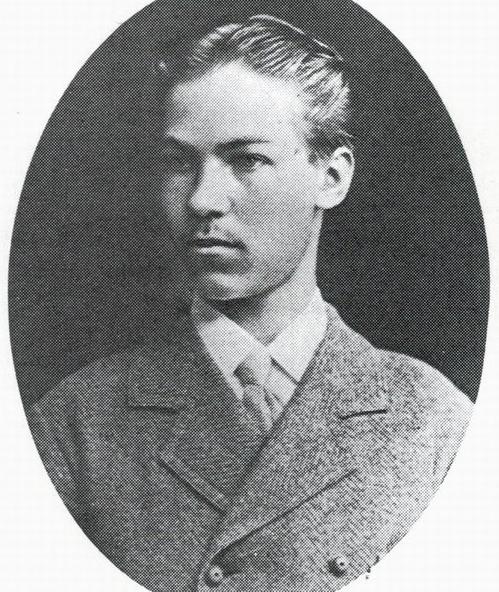
Aleksei Sofronov
xxxxx

Marie (Laundress at the boarding house in Clarens, Switzerland)
Of all the characters in “Fate,” Marie might be thought of as one of the last ones to ever be chosen for a character analysis. Her somewhat brief (but important) appearance in the story might even convince readers that she is a fictionalized character inserted for the sole purpose of showing Tchaikovsky’s valet, Aleksei as having firm heterosexual tendencies. The fact is that Marie, the shy laundress in Clarens to whom Aleksei is passionately attracted, was very real indeed.
It was necessary for me to write her as realistic as possible, especially since she was a living breathing person whose path crossed so significantly with Tchaikovsky’s. I merged the daily flirtations of Marie and Aleksei with the composer’s rehearsals (with musician Yosef Kotek) of the famous Violin Concerto. After all, there was more than just music practice going on that spring. How do we know this? I will explain.
Found in some of Pyotr’s diaries is the evidence that Aleksei was responsible for the pregnancy of the young girl. The two men got news of it after they returned to Russia and while Aleksei never saw Marie again, a monetary connection was established. Pyotr felt somehow responsible for the girl’s plight and supported her financially for many years.
I was tempted to include this information in my novel but finally decided that it wasn’t necessary. I felt I had painted Tchaikovsky’s “good character” and “self respect” sufficiently enough to where this particular generosity would have simply been redundant. I hope readers enjoyed learning about it here.

