Opinion – Orchestral Suite no. 3 in G Major (opus 55)

             As I was cooking dinner the other night, WQXR did me the honor of playing the final movement of Tchaikovsky’s Suite no.3 in G Major. (I always consider it an honor when their channel just happens to grant me a bit of Tchaikovsky when I’m in the kitchen.) Anyway, this final movement is a well-known part of the suite and is called Theme and Variations, or Tema con variazioni, which was actually a popular style of composition structure in the Romantic period of which Tchaikovsky was part.

            The piece features a simple melody followed by variations of it, slightly altered in style, emotion, rhythm, time signature, harmonies, instrumentation, and even key. Tchaikovsky used several of these in combination to shape his initial base melody.

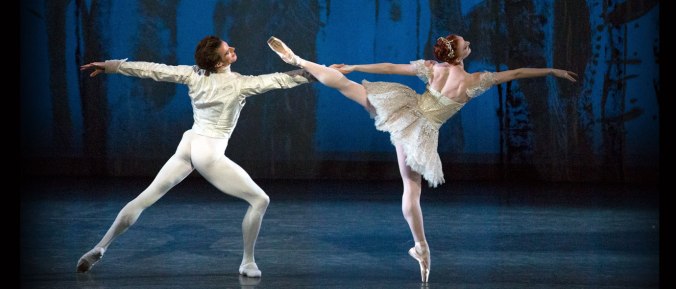
            It is still widely admired today and stands on its own, especially as ballet music. Now, ballet lover that I am, this is not my favorite way of hearing it. For me (and for others I suspect) the dancing is distracting to the brilliance the piece offers. If you have never heard it, I beg you to seek it out. You Tube has many choices if need be. It is nothing short of astounding.

            For optimum enjoyment of Theme and Variations, I listen with headphones, eyes closed so I can fully focus, and let the music consume me. You should try my method too, and see what emotions Tchaikovsky’s twelve variations suggest to you. Below you will find my personal observations of the piece. I believe my impressions are shared by most people because Pyotr Ilyich knew precisely how to invoke a particular emotion in the listener; this was his genius. He cleverly uses phrases of the ominous “Dies Irae” for effect in the fourth variation, and as for the dramatic key change in the final Polonaise…well, it remains as goose-pimply to me today as when I first heard it.  Give it go!

            For readers of my biographical novel, Fate, it may be of interest to note that it was created during one of his stays at his sister’s house in Kamenka and was published by Piotr Jurgenson. It is mentioned in correspondence (written during its creation) to both Modeste Tchaikovsky and Sergei Taneyev.   In my novel, Suite no.3 is only briefly mentioned because its creation and premiere (1885) took place during the passage of time which my story skips over. Ugh, page constraints!

“The [nineteen-minute] finale [Theme and Variations] opens with a rather formal sounding theme for the strings. In the ensuing series of variations on this theme, some of the paraphrases preserve the outlines of the theme faithfully, their altered rhythms, instrumentation and contrapuntal embroidery notwithstanding. Others develop the subject theme’s initial motif in a more free fashion. The final variation leads to a brilliant coda in proud polonaise rhythms.”

Theme and Variations (final movement from Suite no.3 in G Major)

The basic melody can be recognized in each movement even though it has been changed, sometimes drastically.

Introduction of simple two-part melody: Basic, formal, played only by strings

Plucked strings: Very staccato in feeling

Free instrumentation: Frenetic and seemingly uncontrolled

Overlapping woodwinds: Taking the initial melody even further

Heavy cadence: Strong, willful, and ominous

Off beat syncopation of rhythm– Modern and irreverent

On beat emphasis – Power, royalty

Indecorous unison – A holy mass, organ music, joined by a clarinet evoking femininity, gentleness, and forgiveness

Light and fast with syncopation – Childlike, playful, and full of energy

Solo violin interpretation – Exotic and sexy, a single narrative until it is joined by the orchestra

Double-notes: The original melody broken apart and made lilting

Smooth and slow orchestrations – Poignant, heart wrenching phrasing

Polonaise – Fast and lively, the beginning of a spirited dance/ then further varied by rhythm, key signature and key change.   Then, just when you’re sure the entire piece is going to end, it doesn’t. It takes a little turn and builds anticipation all over again to what I feel is one of the best endings of any orchestral work ever. (If it’s conducted correctly, of course!)

Best to all, Adin Dalton

Pyotr & Aleksei

For some reason I’ve been thinking a great deal lately about the connection between Tchaikovsky and his loyal servant, Aleksei Sofronov.  I’m not sure why this is but it has had the effect of reminding me how one of my first thoughts about writing a biographical-fiction of the composer had been to do it completely from Sofronov’s point of view; you know, the ubiquitous Servants’ POV.  As you may know, I decided to go in a different direction. But with the two men so much on my mind I thought it right to share some additional information about them here.  I will try not to spoil anything, in case you’re still reading or intend to read.

It was in Moscow, 1871 that twelve-year old Aleksei Sofronov first had to step in and perform duties as Tchaikovsky’s manservant, replacing his own older brother Mikhail.  Sofronov took over the position permanently in the winter of 1877, setting off what became a relationship of particular closeness, familiarity, and trust between him and the composer. The initial employment was good for the boy, and eventually offered him a steady, paying job that included room and board as well as travel outside of Russia.

The relationship benefited Tchaikovsky as well. He needed and depended on Sofronov’s service, not only for daily errands, grooming, valet duties, and household maintenance, but also as confident. Living together as they did for decades, there were times when Tchaikovsky had no one closer to him (or close-by) as Aleksei Sofronov.  As sensitive and introverted as Tchaikovsky was, he naturally grew much attached to him emotionally and seemed to have felt extraordinary warmth towards him, much of which can be noted in the letters they exchanged whenever they were separated. (Hundreds of these letters have survived, many of which are currently archived at Tchaikovsky’s last house in Klin, Russia, which is a museum trust and welcomes many visitors each year.) In these letters, the composer consistently addresses Sofronov by several different affectionate Russian-style nicknames such as Alyosha -as opposed to Aleksei.

When I had to deal with these two (real people) as characters in my book, their close yet professional friendship was not easy to show in words. I was faced with terrible decisions throughout their changing relationship, decisions that would impact both the emotional force of my story-line as well as the basic narrative. It was important to me from the start that my book present a truthful telling as I saw it, and not just relay the repeated hearsay or innuendo of the past one-hundred fifty years; things unfortunately get twisted a bit over that long a time-span. I grappled with these decisions daily while working to bring their relationship to life, carefully avoiding the extremes in description and dialog that would only serve to create an unrealistic (or even cartoonish) pretense about their obvious bond. To keep their connection to one another realistic, and true to how it probably was, I had to walk a daily tightrope of words and phases. My hope of course is that I somehow succeeded, but I must let others be the judge of that.

-Adin Dalton

Blog note: Today’s posting will seem less cryptic to those who have read the novel Fate.  If you’re interested in the composer Pyotr Ilyich Tchaikovsky and his amazing life, grab a copy today. (Exclusively at Amazon.com)

Forget everything!

Forget everything you’ve ever heard about Tchaikovsky, (unless of course you’ve read my biographical novel, Fate.)

I will admit that accurate information about the composer, at least on certain internet sites, has actually improved of late. But while busily doing research about him between 2001 and 2009, I was very disheartened at the multitude of misinformation, deceitful lies, and lunatic theories that were out there. It was seemingly everywhere; in books, articles, movies, plays, and even in the printed programs at the theatre. I had to wade through all of it like a Venetian during acqua alta, and it wasn’t pleasant.

The theatre Playbills somehow affected me the most. There I was, out for an evening of Tchaikovsky, when I would see an article about him printed inside the program.  I devoured such things before the curtain even rose and always with the enthusiasm of a wildly beating heart.  Even American Ballet Theatre and the New York Philharmonic were guilty of misinformation. You can imagine how reading factual garbage about P. I. affected me. Sometimes I could barely enjoy the performance that followed because I was so upset.  ABT and the NYPhil have now corrected most of the “errors” due to my unyielding perseverance  (read: bitchy abhorrence about such things.)

Example. A Playbill article from the philharmonic actually stated in no uncertain terms that Tchaikovsky fought in a duel and then afterwards was inspired to compose his Eugene Onegin.  WHAT??  Ummm, Tchaikovsky was never in a duel. And he definitely didn’t invent the story of Onegin; that was Aleksander Pushkin, who was in a duel… Obviously you have confused the two.  How could such an error be made? Who was doing the researching and why,  good heavens, was it being put into print for the supposed education and entertainment of audience members? Sheesh.

ABT was less guilty perhaps, stating for years in the historic info section of their Playbill (and on their website) that Petipa’s glorious ballet La Bayadère had premiered in 1875 at the Mariinsky Theatre. Wrong. The Mariinsky in those days was purely a venue for opera. La Bayadère premiered at the Bolshoi Kamenny Theatre.  Merely an insignificant error that doesn’t matter? Not to me.

I could go on and on; the off-Broadway play about Tchaikovsky that had Pyotr and Bob only ten years apart in their ages so they could conveniently (and ridiculously) be linked romantically…or the lovely hardcover book which stated how Tchaikovsky saw the opera Carmen at the Palais Garnier (Paris Opera House) in 1875 –  Before the Palais Garnier had even been built? Wow, amazing. And here I thought Carmen played at the Opera-Comique on rue  Favart.

“What about sections of story-line in Fate which must have been fabricated, Ms. Dalton?”  Fair enough.  thanks for asking. Well, let’s just say there’s a difference between filling in unknown or intimately private periods of a person’s life and plain old incorrectness. And in my novel, the framework on which I hang the details of the story is an accurate one. That’s why it works.

pushkinduel

The illustrious poet, Aleksander Pushkin (in black) about to duel.

Tchaikovsky at the Met Opera House

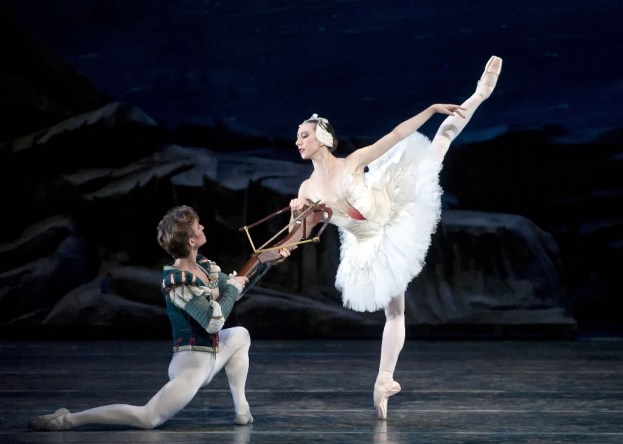
        For those lucky souls who will be in New York City from June 12 to 17, 2017 a treat is in store: American Ballet Theatre is presenting their beautiful (albeit slightly shortened) production of Swan Lake. Any chance to hear Tchaikovsky’s music played by a live orchestra should get your attention but when it’s accompanied by breathtakingly talented dancers, well, there are no words. Please go.  

Met box office: 212-362-6000

The casting for the eight performances has been announced and I highly recommend Monday evening at 7:30pm with Isabella Boylston & Alban Lendorf.  I will be there, of course!   -Adin Dalton

isabellaswanlake

Summertime Tchaikovsky

Trade the sticky July humidity for the cool comfort of the Met Opera House…

As famous as P I Tchaikovsky was in his own lifetime, that fame can not be compared to the level it has reached today. He is a multi-million dollar enterprise.  This is a fortunate thing for residents and visitors to New York City where Tchaikovsky events can be found year ’round at many different venues. One of these magical events is coming up soon.

For the best seats to American Ballet Theatre’s upcoming Tchaikovsky Spectacular, visit the Met website as soon as possible.  The company’s week-long presentation of ballets choreographed to Pyotr’s music will feature six different works: five old favorites, and a new ballet by dancer Marcelo Gomes.  As always, a full orchestra will accompany ABT’s top dancers for this event – July 3 through July 8, 2017.  Look for performances by my two current favorite dancers, Jeffrey Cirio and Isabella Boylston. Get your tickets now!

tchaikovksyABT

Marcelo Gomes & Gillian Murphy in The Sleeping Beauty

The Fate Blog

Well, it’s Sunday morning in New York and there is every reason to believe that this new website, gallery, and blog for the biographical novel “Fate is finally up and running correctly.  It has also been linked to my name on amazon.com (right below the title) giving one-click access to my humble “Author’s Page.”

Surprisingly, the paperback print version of “Fate” will have my new website address at the back of the book within a day or two, but updating the eBook is not nearly as fast. After inserting the new web address into the original manuscript, I then must then submit (with gobs of guilt) the request for yet another updated version from my book formatter Jason Anderson who resides on the island of Tasmania off the coast of Australia. Yes, there really is a place called Tasmania and it is breathtaking to behold. I will insert a pic of it below.

Anyway, Jason is not easy to reach because when I am awake, he is asleep– thanks to the 14 hour time difference between us. I will wait anxiously as he looks over my request, puts it in his busy work queue, and then finally sends me the new version. Once I have my grubby little hands on it (and after a thousand thank you’s by email to dear Jason) I will dash to the nearest laptop computer and officially submit it to amazon’s Kindle books department where it is uploaded to be re-approved. Another day or two after the submission, I should finally receive notification that it has been republished. All this just to insert the new “Fate” web address into the back of the ebook. There aren’t enough daiquiris in the world.

~Adin Dalton

By the way, Jason Anderson (Polgarus Studio) happens to be the most intelligent, most patient, most amazing book formatter in the world. Here’s where he lives:

OLYMPUS DIGITAL CAMERA

tasmania1